Featured Post

Ultra violet

UV is a form of radiation generated by atomic transitions in chemical reactions such as those present in the Sun and in man-made equipment s...

Thursday, January 28, 2010

Package-Type Improvised Explosive Devices (IEDs)

Concealed Mortar/Artillery Projectiles


The enemy in Iraq has used IEDs consisting of mortar and artillery projectiles as the explosive device. The most common explosives used are military munitions, usually 122 mm or greater mortar/tank/artillery.

The use and characteristics of these have included the following:

* Thrown from overpasses.
* Thrown in front of approaching vehicles from roadside.
* Usually thrown by males—who are not always adults.
* Emplaced in potholes (covered with dirt).
* Emplaced along MSRs and alternate supply routes (targeting vehicles).
* Employed along unimproved roads (targeting patrols).
* Employed with 120-mm and larger artillery or mortar projectiles.
* Found alone or in groups.
* IEDs behind which are placed cinder blocks or piles of sand to direct blast into the kill zone.
* Command detonated—either by wire or remote device.
* Time-delay triggered IEDs. IEDs that can be detonated by cordless phone from a car (allows for mobile firing platform and prevents tracing or triangulation).

Modified Conventional Munitions

The examples below are all IEDs that have been recovered in Iraq.
Anti-Tank Mine encased in
concrete and command
detonated via remote control

Improvised Off-Route Antitank Mine 500lbs bomb rigged as IED
Artillery shells rigged as IEDs Artillery shell-based IEDs hidden in bags along roads

Artillery shell-based IED hidden in
plaster made to look like a concrete block


FROM: http://www.globalsecurity.org

Monday, January 25, 2010

Vehicle Borne IEDs (VBIEDs)


Vehicle borne IEDs (VBIEDs) are devices that use a vehicle as the package or container of the device. These IEDs come in all shapes, colors, and sizes which vary by the type of vehicles available — small sedans to large cargo trucks. There have even been instances of what appeared to be generators, donkey drawn carts, and ambulances used to attempt attacks on Coalition Forces and the New Iraqi Government.

Larger vehicles enable larger amounts of explosive that can be used, resulting in a greater effect. Functioning of devices can vary within the same methods as the package types and can have the same common characteristics or indicators as other IEDs. VBIEDs have increasingly used larger amounts of explosives, and the explosive charge has ranged anywhere from 100lbs to well over 1000 pounds. The explosive charge has included items such as mortar rounds, rocket motors, rocket warheads, PE4 explosives, and artillery rounds. Functioning of devices can vary within the same methods as the package types and can have the same common characteristics or indicators as other IEDs A growing technique in VBIED attacks in Iraq has involved the use of multiple vehicles. In such instances, the lead vehicle is used as a decoy or barrier buster. Once stopped or neutralized and with coalition forces starting to move to inspect or detain – the main VBIED comes crashing though and into the crowd before detonating; thus resulting in an increase of the casualty ratio.

FROM: http://www.globalsecurity.org

Sunday, January 24, 2010

Improvised Explosive Devices (IEDs) / Booby Traps Locations

Indicators

By definition, booby traps are disguised or well-hidden, victim-activated devices. The initiating object is going to be fairly obvious, as it is the object that the enemy hopes a soldier will interfere with in order to set off the trap. Booby traps rely on an unwary or distracted soldier touching or pulling a physical object (such as a war souvenir) or provide a too-easy access or simple solution to a problem (such as leaving only one door open in an otherwise secure building).

In an operational environment where booby traps have been used, soldiers must be trained to constantly question why things are positioned where they are or why the enemy might have left obvious routes open. The enemy will watch reactions and procedures executed when moving through an area. They will be looking for natural behavior and weaknesses in soldiers' drills. For example, in Vietnam, the Vietcong (VC) noticed soldiers liked to kick empty soda cans that were lying on the ground. It was not long before the US troops found that the VC were leaving explosive devices in empty cans lying alongside regular patrol routes. The devices were activated when the cans were kicked.

Many of the booby trap indicators mirror those of mines. These include areas where the locals do not enter, such as abandoned buildings and attractive items that are usually left alone.

* Electrical wires, batteries, booby traps, and store items (clothes pegs, mouse traps, steel tubes, and springs).
* Isolated boxes and containers along routes.
* Abandoned vehicles, military equipment, weapons, uniforms, and papers.
* Trip wires, string, and cables.
* Disturbed soil and sand.
* Dust.
* Footprint trails that stop suddenly.

Friday, January 22, 2010

Improvised Explosive Devices (IEDs) / Booby Traps


Firing Devices

In low-intensity, stability and support operations and counterterrorism conflicts, there may be high incidences of improvised devices and booby traps. It is impossible to provide a complete list of firing devices (FDs) and improvised demolition materiel that can be used. Most improvised traps are variations of those described below. Some IEDs can be victim-activated.


Nonelectric FDs. Most nonelectric FDs are based on pressure, pressure release, or trip wire actuation. Improvised FDs are usually of the shear pin or pin removal type. * Improvised electric FDs. An electric FD requires a current to pass between two contacts. The ways in which this can be achieved are unlimited. Booby traps/IEDs utilizing electrical components are limited by having to use a power source. In most cases, the power source will be a battery. The life of this type of booby trap is limited to the life of the battery.

FROM: http://www.globalsecurity.org

Thursday, January 21, 2010

Electronic Warfare in WW1- The Telegraph War (5)


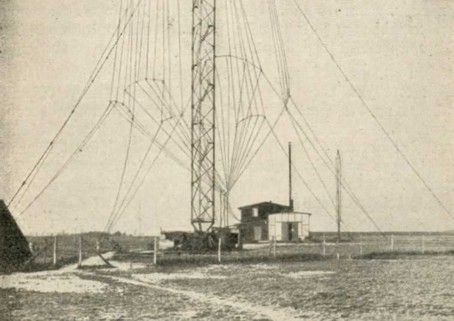
Powerful stations were established in Germany the main one being a Nauen.. When war broke out and Germany lost its cable links it still retained a world wide network of wireless stations. Moreover by wirelessing a German station in the United States messages could then be put on an international telegraph service there. This was how many messages to and from Mexico and South America were transmitted. This was facilitated by a strange decision made by President Wilson himself, this was that, whilst to enforce US neutrality, outgoing radio messages would be subject to a Federal censor’s approval (to ensure that they were not of a military nature), there would be no control over telegraph messages carried by cable. Thus a coded message could be received by a German commercial wireless telegraphy service in the USA and then taken to an American cable service for onward transmission to anywhere in the world without any check on its contents.Britain also invested in wireless stations around the world, primarily to service the needs of the Royal Navy.

Wednesday, January 20, 2010

Improvised explosive device (IED)


From: Wikipedia

An improvised explosive device (IED; also known as a roadside bomb due to contemporary use) is a homemade bomb constructed and deployed in ways other than in conventional military action. One may be constructed of conventional military explosives, such as an artillery round, attached to a detonating mechanism. IEDs may be used in terrorist actions or in unconventional warfare by guerrillas or commando forces in a theater of operations. In the 2003–present Iraq War, IEDs have been used extensively against coalition forces and by the end of 2007 they had become responsible for approximately 40% of coalition deaths in Iraq.[1] They are also the weapon of choice for insurgent groups in the 2001–present Afghanistan War.[2] They were also used extensively by cadres of the rebel Tamil Tiger (LTTE) organization against military and civilian targets in Sri Lanka[3][4] before the LTTE was dismantled in mid 2009 by the Sri Lankan military forces.

Tuesday, January 19, 2010

How Camcorders Work - CCD

How Camcorders Work

Hoe CCD Work

Hoe CCD Work

First Video/Electronic/Audio

First Video/Electronic/Audio

Airplane Cockpit Video Recording

Airplane Cockpit Video Recording

Night vision device Zero to Fouth Generation

Night vision device Zero to Fouth Generation

Electronic Warfare Capability


Army initiates electronic warfare capability
BY Lt. Col. Carl S. Ey

Sgt. 1st Class Robert Dorneman controls the switch panel to raise the Joint Land Electronic Netted Sensor (J LENS) tower during maintenance at Kandahar Airfield, Afghanistan. The J LENS is used to provide security for Kandahar Airfield. Photo by Sgt. Andre' Reynolds
More Images
WASHINGTON (Army News Service) - The Army is developing a new core competency for career Soldiers and officers interested in becoming electronic warfare specialists."As the Army continues to face an increasingly sophisticated, learning and adaptive enemy, who will engage in asymmetric warfare characterized by irregular tactics, terror, and the use of the most deadly casualty-producing means available to them, we find ourselves needing to develop new ways to attack and defeat these adversaries," said Lt. Gen. James J. Lovelace Jr., Deputy Chief of Staff for Operations.

IR Windows

IR Windows

Sunday, January 17, 2010

Raytheon Completes Design Review for CVN 78's Dual Band Radar


Raytheon and the U.S. Navy recently completed a critical design review (CDR) for the Dual Band Radar (DBR), which will be installed on the Navy's next-generation aircraft carrier, the USS Gerald R. Ford (CVN 78) (Figure 1). The DBR, produced by Raytheon Integrated Defense Systems (IDS), is the Navy's most advanced multifunction radar; it will provide superior surveillance capabilities supporting air operations and ship self defense. Leveraging advanced technologies to meet the carrier mission requirements in both deep water and littoral environments, DBR will be the U.S. Navy's most capable radar and a critical asset for the fleet.The review demonstrated that the radar, currently in production for the Zumwalt-class destroyer (DDG 1000), meets the critical operational requirements of the Ford-class aircraft carrier. As a result of DBR's modular, open architecture design, only minor modifications need to be made to accommodate specific platform differences between DDG 1000 and CVN 78. The DBR's open architecture design provides the flexibility to adapt the radar to different naval surface combatant platforms, combat systems and missions. The Dual Band Radar combines the benefits of S-band and X-band radar capabilities to provide superior performance in a broad range of environments against a variety of threats; its innovative design greatly reduces manning.

Picture: The Gerald R. Ford-class aircraft carriers (or Ford-class) will be the next generation supercarrier for the United States Navy. Shown here is an artist’s depiction of the CVN-78 Gerald R. Ford.

From: http://www.cotsjournalonline.com/

Saturday, January 16, 2010

Electronic Warfare in WW1- The Telegraph War (4)


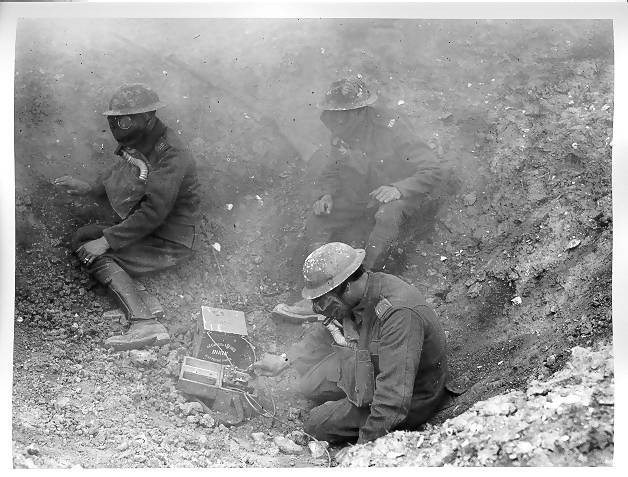
Like all new devices it took time to roll the new system out but it was in fairly widespread use amongst the Allies by the end of the war. More advanced versions of the Fullerphone system were in extensive use in World War Two.
Wireless Wars

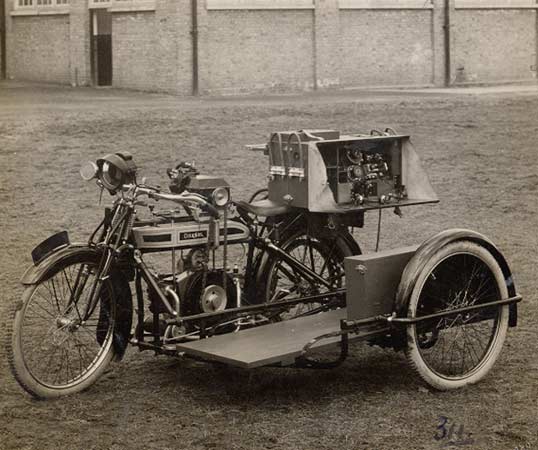
In 1914 the use of wireless was largely restricted to large relatively permanent land installations and ships. The inhibiting factor was both the lack of portability of the equipment itself (particularly the receiving units) and the size of aerial needed to have any sort of effective range. By the end of 1918 wireless sets were in use in the front line, in tanks on wireless trucks, from aircraft and even motorcycle mounted. Right from the beginning wireless played an important strategic role. Germany anticipated the possible loss of its submarine cables if war broke out and invested heavily in installing powerful wireless stations in all its colonies, even the smallest. German commercial companies were ‘encouraged’ to set up subsidiaries with large transmitters and receivers in countries that were likely to be neutral. The United States was the principal country in which this was done and Telefunken established a number of stations there (they also supplied the US Army with wireless equipment).

Picture 1
Motorcycle mounted Marconi set
Picture 2 Fullerphone in use