Thursday, October 7, 2010

Wednesday, October 6, 2010
Friday, October 1, 2010
Sunday, May 23, 2010
Saturday, May 15, 2010

Tuesday, April 20, 2010
Electro-Optics Measurement

Electro-Optics is the field of technology which, aided by electronic components and techniques, involves the emission and/or reception of radiation in the Infra-Red, Visible and Ultra Violet portion of the Electromagnetic spectrum.
In Electro-Optics it is common to use the measurement of wavelength (l) to describe different components. Wavelength is measured in Microns (m) while the Frequency is very rarely referred to.Thursday, April 1, 2010
Mobile phone use backed on planes cell base station - onboard communication

"Mobile use is currently prohibited on planes because there is evidence that they interfere with onboard communication and navigation systems.
The proposed system utilises an on-board base station in the plane which communicates with passengers' own handsets. The base station - called a pico cell - is low power and creates a network area big enough to encompass the cabin of the plane.
The base station routes phone traffic to a satellite, which is in turn connected to mobile networks on the ground.
A network control unit on the plane is used to ensure that mobiles in the plane do not connect to any base stations on the ground. It blocks the signal from the ground so that phones cannot connect and remain in an idle state.
Calls will be billed through passengers' mobile networks. "
Related article: - Mobile phone base station aboard Qantas airline enables cell phone usage
Tuesday, March 23, 2010
IED jammer


Bomb Jammer - Portable countermeasures for IED Defeat
The C-Guard TXP ECM is a portable, battery powered IED Jamming device, designed for multiple use: it can be operated using a car battery, an external 110/220 Vac or rechargeable batteries, allowing total mobility. The TXP ECM is housed in a trolley-style pelican case which can be carried by one person. Fully ruggedized, this IED jammer can be used under tough environmental conditions.
The TXP ECM is designed for easy and rapid field deployment, providing IED protection also in combat fields where the anti IED vehicle has no access. Blocking multiple frequency bands in one case, the C-Guard TXP ECM can block VHF, UHF, cell phones, satellite phones and more.
The C-Guard TXP ECM IED jammer was built to support any mission profile, including long missions in field. Optional spare rechargeable batteries can be instantly field-swapped during the jammer’s operation, this "hot-swap" option enables continuous use of the bomb jammer for IED defeat.
The C-Guard TXP ECM IED jammer may be operated for anti-IED vehicle protection, and then easily removed from the vehicle to provide portable secutrity for ground troops by powering it using batteries.
Netline offers variety of antennas for the TXP ECM, selected according to mission requirements and limitations. C-Guard TXP ECM Bomb Jammer The TXP ECM is battle-proven and is being used worldwide by: Military forces Bomb-Squads SWAT teams Anti – terror units Special Response Teams VIP protection units For a lighter, portable IED jamming system see the C-Guard ManPac
Tuesday, March 16, 2010
Counter Remote Control Improvised Explosive Device (RCIED) Electronic Warfare (CREW)

This effort is in response to an urgent Operational Need Statement (ONS) for an operational capability to prevent and/or defeat Improvised Explosive Device (IED) detonation ambushes that are a pervasive threat throughout the Operation Iraqi Freedom (OIF) theater of operation. This Statement of Objectives (SOO) provides the government's overall objectives for executing contract actions to produce, field and support a next generation Counter Remote Control Improvised Explosive Device (RCIED) Electronic Warfare (CREW) system, herein referred to as CREW Spiral 2 (CREW-2). The CREW-2 system shall provide increased capability over existing CREW Spiral 1 (CREW-1), a.k.a Warlock Family of Systems, with simultaneous coverage against all RCIED threats at increased ranges, broader frequency coverage extendable to higher frequencies, ease of programmability, reduced size-weight-and-power and built-in capacity for future growth. The ONS requirement is for use in tracked/wheeled vehicles, dismounted (note, not man-packable) and fixed sites for convoy, gate-keeping and Explosive Ordinance Disposal (EOD) operations.
On 3 June 2004, the U.S. Army Central Command (CENTCOM), Multi-National Corps?Iraq (MNC-I), identified an urgent Operational Need for Electronic Countermeasure (ECM) Devices and associated logistics support services to counteract the enemy use of Improvised Explosive Devices (IEDs) against Coalition Forces. This requirement was validated by Headquarters, Department of the Army (HQDA) on 10 August 2004. CENTCOM provided classified information to HQDA that detailed the number of convoys, gate-keeping and EOD operations that require CREW systems. To date this requirement has been met with the fielding of multiple configurations of CREW-1 devices (Warlock Family of Systems) which have certain limitations. CREW-2 systems are required to continue to meet urgent mission requirements and to provide a one system solution that can meet the full operational capability in a single system configuration.
CREW is a US Army managed evolutionary acquisition program that employs a spiral development approach to allow for rapid fielding of incremental CREW capabilities. CREW-1 was initiated in 2003 to address the immediate warfighter need by producing and fielding a Warlock Family of Systems. These CREW-1 systems are in various configurations and varied levels of performance. As currently configured, none of these systems completely address the total MNC-I operational requirement. With multiple configurations come a training and sustainment burden, and the adaptive and evolving nature of the threat dictates that CREW systems must have an open architecture to accommodate system growth. The CREW-2 system shall address these issues by providing a capability against a broader spectrum of RCIED threats, a common supportability approach, a design that is sufficiently flexible to allow for future capability growth, and one that is affordable to the government. Future CREW spirals are envisioned that will encompass requirements beyond this immediate acquisition.
Tuesday, March 9, 2010
Improvised Explosive Device Disposal (IEDD) Suit and Helmet
 The Med-Eng EOD 9 Bomb Suit and Helmet ensemble has been designed with direct input from bomb disposal technicians to provide the highest degree of modular protection and operational flexibility for EOD and CBRN missions. The Med-Eng EOD 9 platform can be configured in the field by EOD or IEDD technicians based on the suspected presence of a CBRN agent in an IED.
At least 14 types of testing have been performed to validate the performance of the EOD 9, including extensive live-blast testing.
The Med-Eng EOD 9 bomb suit includes a Jacket, Integrated Groin Protector, Trousers and Boot Covers for integrated blast protection against IEDs and bombs. The system is stored in a rugged bag for storage in bomb squad response vehicles.
Friday, March 5, 2010
A light-emitting-diode - LED Lamp
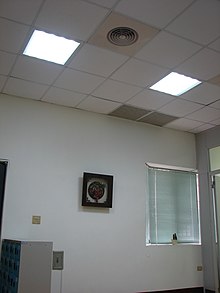
A light-emitting-diode lamp is a solid-state lamp that uses light-emitting diodes (LEDs) as the source of light. Since the light output of individual light-emitting diodes is small compared to incandescent and compact fluorescent lamps, multiple diodes are used together. LED lamps can be made interchangeable with other types. Most LED lamps must also include internal circuits to operate from standard AC voltage. LED lamps offer long life and high efficiency, but initial costs are higher than those of fluorescent lamps.
Subscribe to:
Posts (Atom)